Ethnomusicology
Ethnomusicology
Field recordings, oral traditions and the music of places at risk of being forgotten.
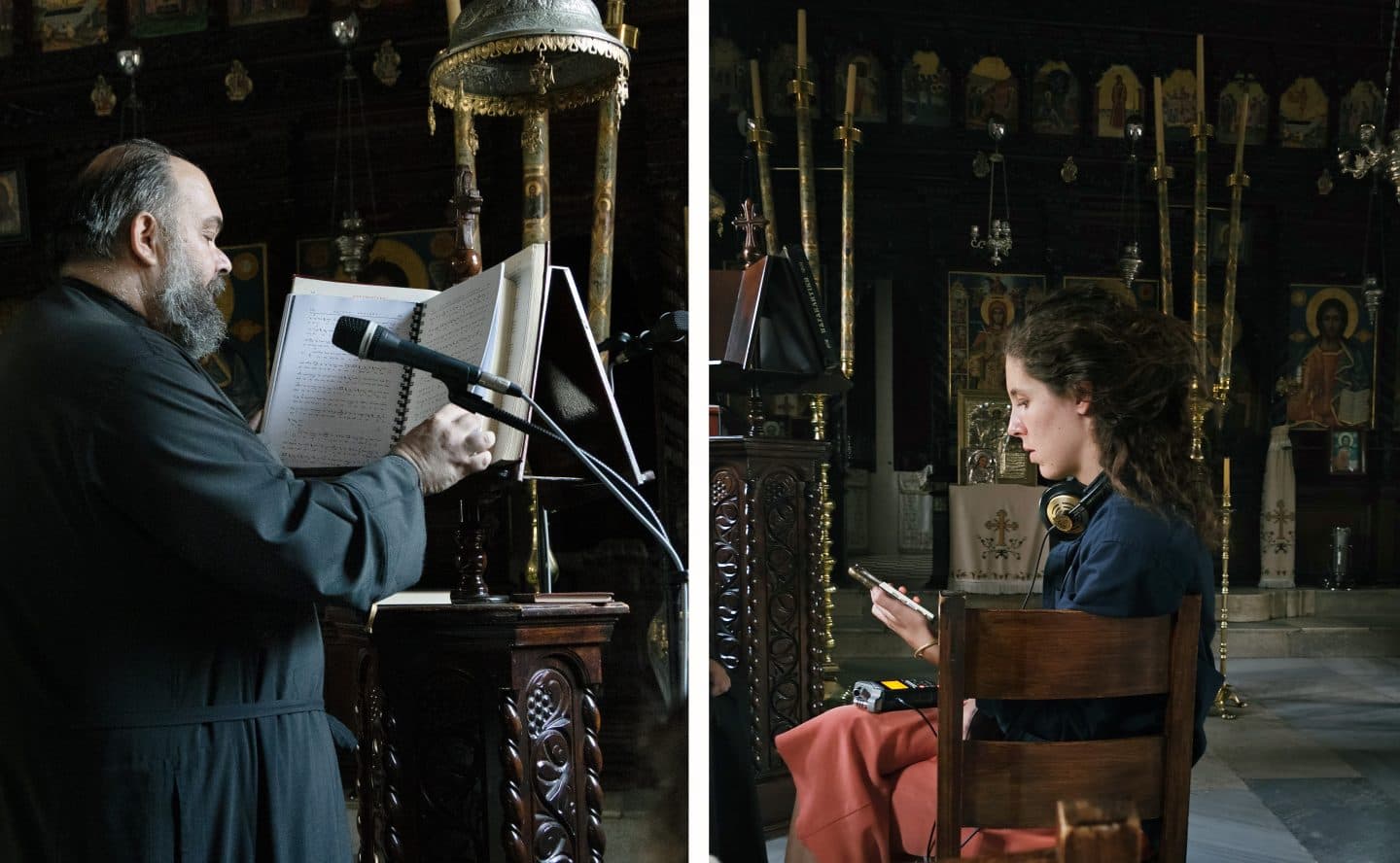
Hydra, 2023 · Photo by Ekaterina Juskowski
An ethnomusicological practice
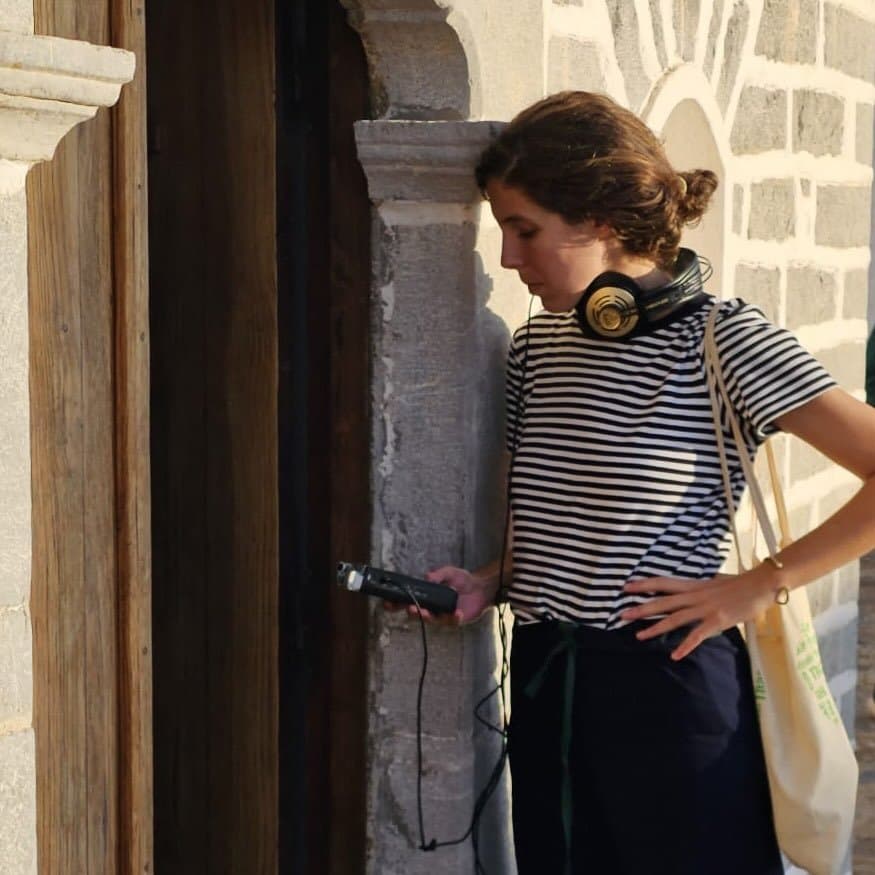
Angela's ethnomusicological work sits between research and composition. Travelling with a microphone, she records the voices, instruments and ambient soundscapes of communities whose musical traditions are under threat — then weaves those materials into new orchestral and electronic pieces.
Her MA thesis at the Sorbonne examined Alan Lomax's early field recordings — "Hard Hitting Songs For Hard-Hit People: How Music Shapes Survival" — a question she has continued to ask in her own fieldwork from Ethiopia to Hydra and the rivers of Europe.
The result is music that doesn't fold field recordings into a backdrop, but treats them as instruments — equal partners in dialogue with strings, voice and electronics.
Field projects
From Mississippi, Memphis and New Orleans to Ethiopia, Romania, Hydra, Corsica, Italy and the Sierra de Francia — field recording and preserving fading musical traditions, reinterpreting those archives in contemporary work, and carrying them into cinema as one of the very few ethnomusicology consultants for film in the world.
2026
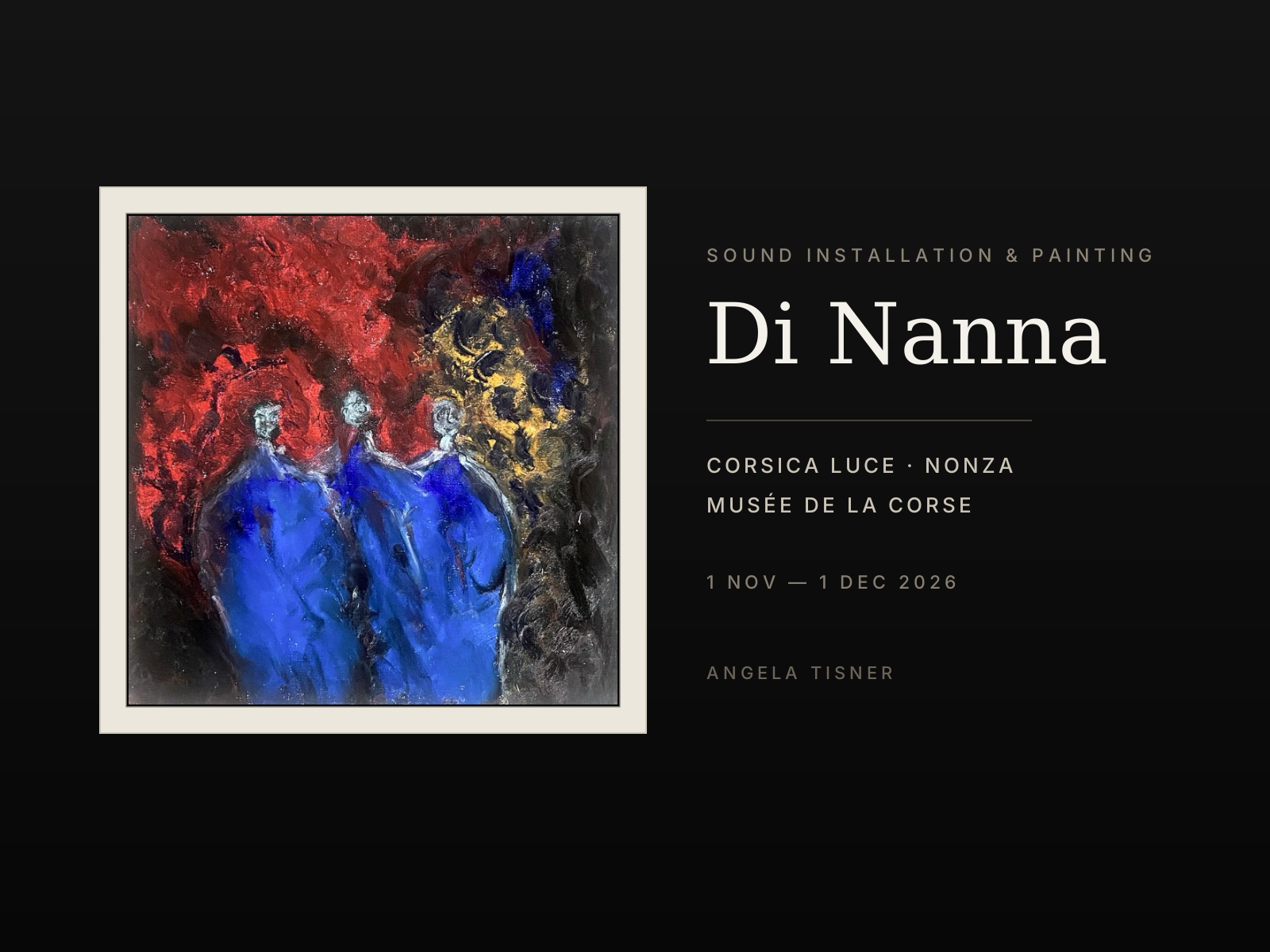
Di Nanna
Corsica Luce, Nonza · Musée de la Corse · Phonothèque de la Corse
Forthcoming — creation residency, 1 November – 1 December 2026
A Corsican sound archive turned into new composition and painting. Shepherds, poets and singers between fifty and ninety years old, recorded on the island and given to the Musée de la Corse — a chiami è rispondi captured live, Holy Week polyphonies, the Catenacciu of Sartène. In 1895 a twenty-year-old Ravel was asked to harmonise twelve Corsican songs, carrying oral voice into orchestral score. Di Nanna answers that gesture: from the collective, ritual repertoire a new composition is built with cello and recorded instruments, while the individual voices are kept intact. The archive then travels on into image — a large-format series on canvas, worked in relief.
Field recording excerpts
Luna
Francescu Jeromini · Niolu mountains, Lozzi · April 2025
Perdonu Mio Diu
U Catenacciu · Sartène · 18 April 2025
2025
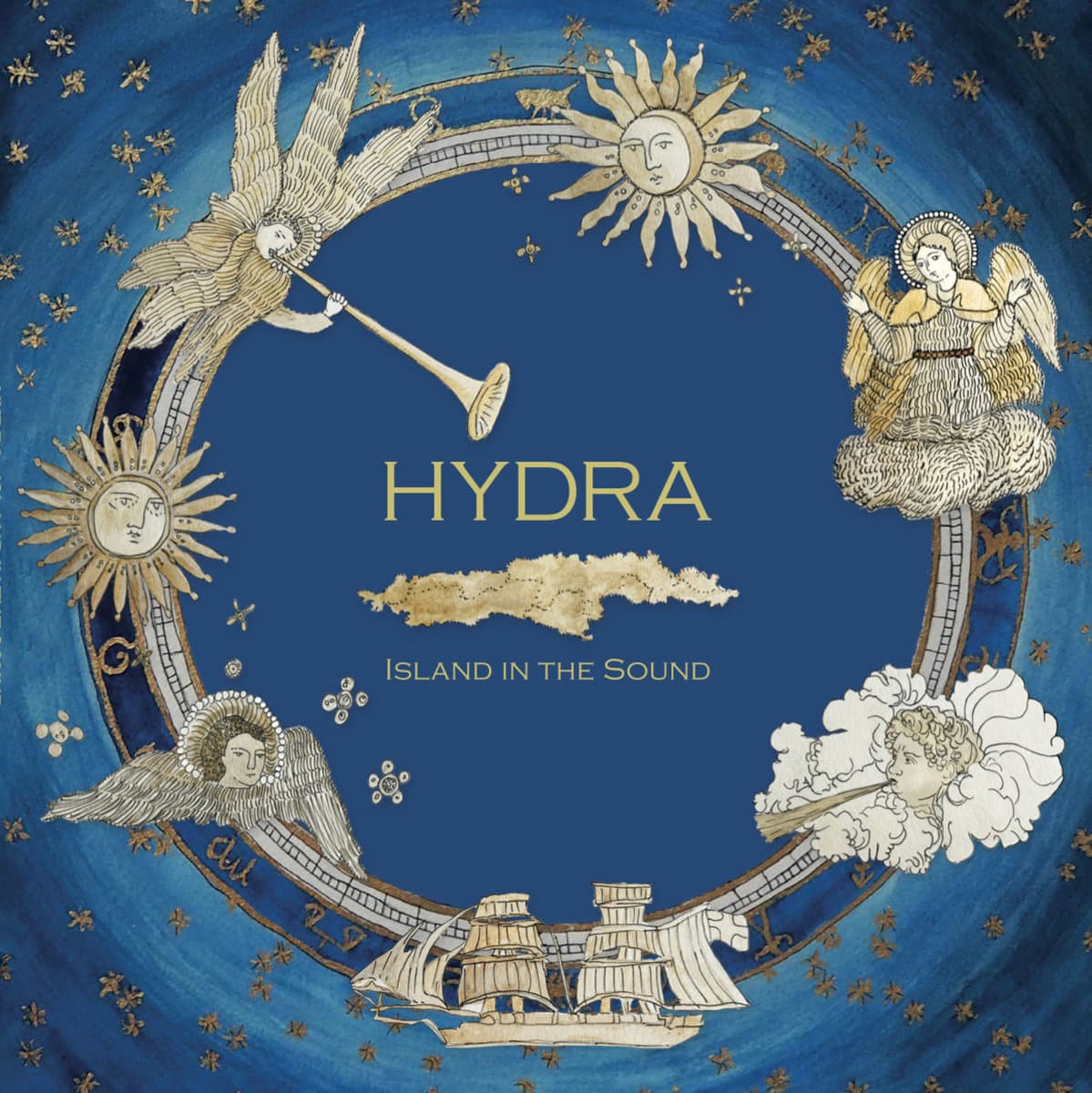
Island in the Sound — Hydra
Gagosian Gallery · Old Carpet Factory · Hydra
Six compositions recorded on the Greek island of Hydra, each built around the voices of local cantors and craftspeople. A portrait of an island told through its sound.
The beauty and historicity of Hydra moves both those passing through and the islanders themselves. The Hydriotes carry in them pieces and gleams of an island scorched by flowers and salt, and conversing with them, and with their religious figures, granted me a communion and a luminous connection with a culture that, far from melting away in the waves of tourism, keeps rebuilding itself upon its distant ruins.
The music and chants I found in Hydra still seal the circumstances and emotions of daily life, they narrate, and they carry us to moments undrawn in time, much like the boats suspended in the silver sea that sustains the impossible Peloponnese. Converging those chants and musical fragments with my own sensibility, I traced a visual and archaic process: the metallic oscillation of the synthesiser, recalling the classicism of strings and orchestra, answers those voices through a kind of magical realism. Not only an island of beauty and repose, but a deep and invisible cadence that continues to make its way beneath the sun.
2025
A Century of Sounds
Pitt Rivers Museum, University of Oxford
An audio-visual commission threading original orchestration through a hundred years of archival field recordings from across the world. The piece treats archival sound as a living material, in dialogue with the present.
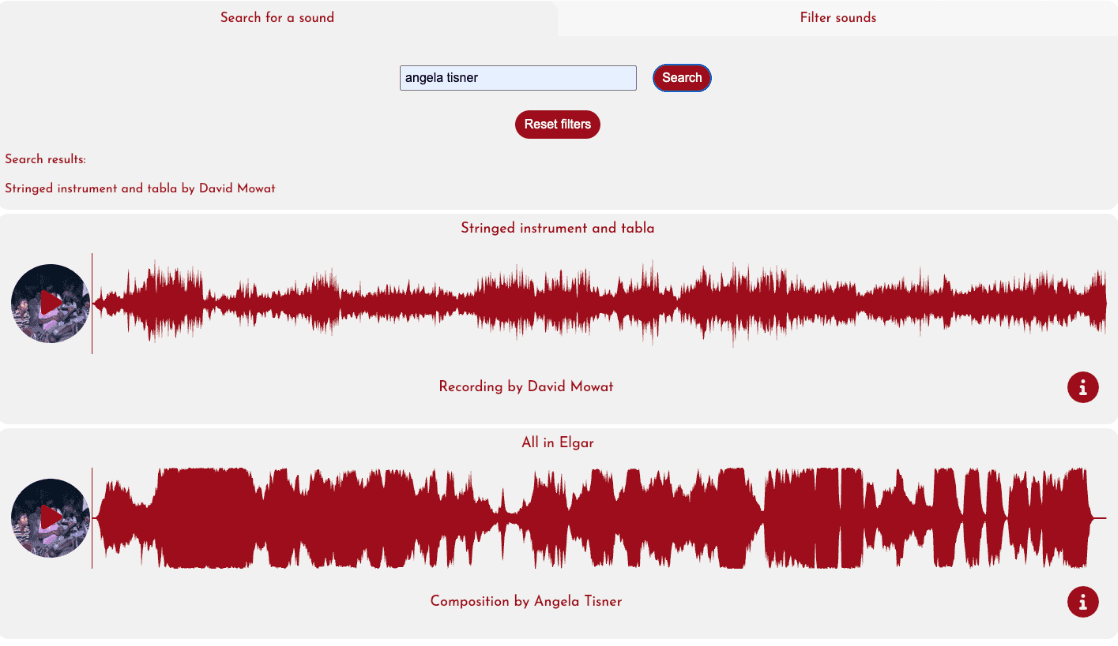
A Century of Sounds is a partnership between Cities and Memory and the Pitt Rivers Museum at the University of Oxford. The project invites listeners to explore compositions created by selected contemporary scene composers, each working from a single recording drawn from a century of incredible ethnographic material in the museum's sound archive.
My contribution, All in Elgar, takes a recording of stringed instrument and tabla — captured by ethnographer David Mowat — and reimagines it as a chamber piece that holds the original sound at its centre. The composition doesn't fold the field recording into a backdrop; it treats it as a soloist, with orchestral writing answering, framing and shadowing the archival voice.
The wider project is searchable by category, year, country and instrument — a living index that places a hundred years of recorded life next to a hundred new responses.
Working with such overwhelming and divine material, I deliberately refrained from over-determining its symbolism. The composition leans into sonic patterns, repetition, recurrence, almost delirium and possession, and ends as a quiet nod to Edward Elgar: an abstract gesture of camaraderie in the face of the immensity of cultures and sonic narratives that, in the end, reduce themselves to the act of recounting daily life and the emotions that embody the human condition.
2024
Flow
Cities and Memory · EGU General Assembly, Vienna
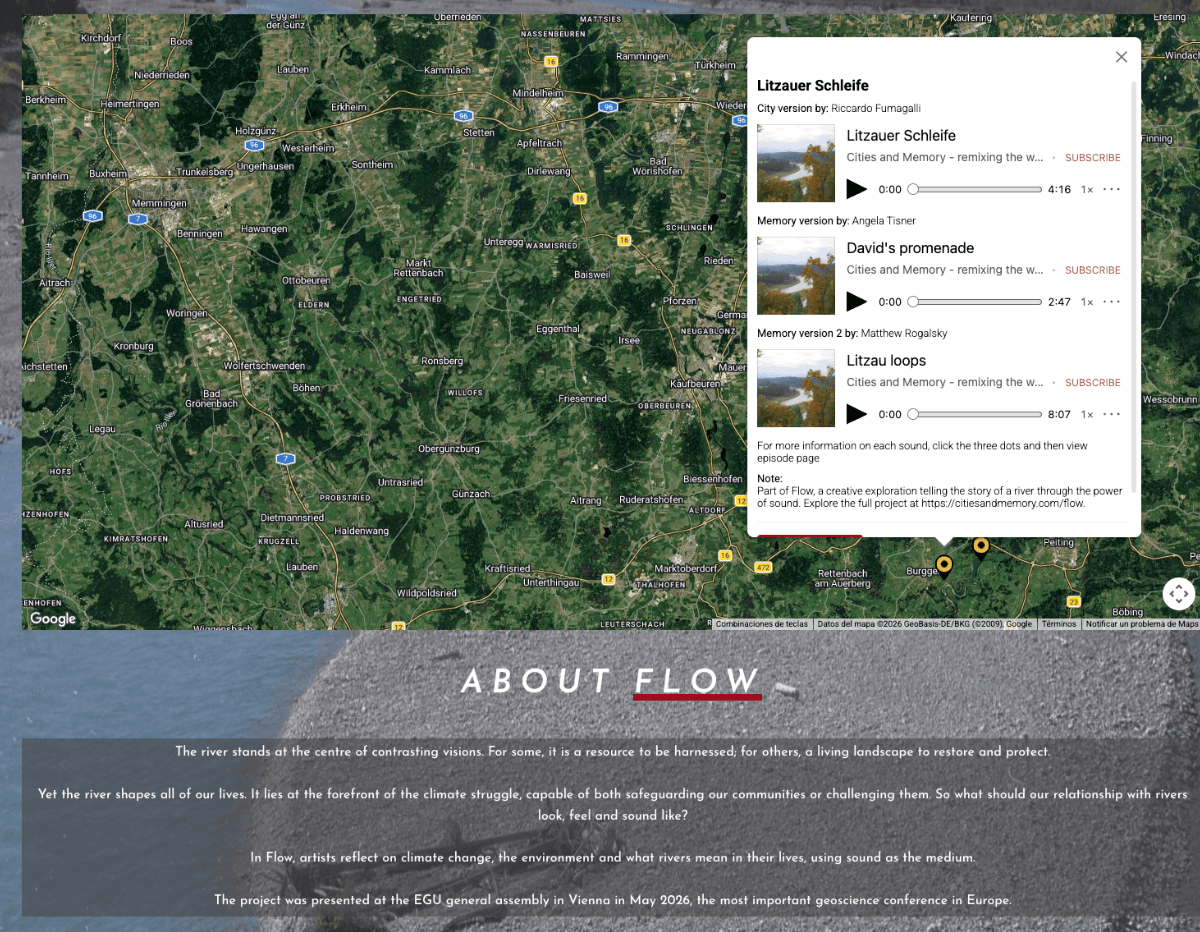
A composer's contribution to a global project sounding the climate emergency through rivers. Field recordings amplify the hydraulic voice of water; the score answers in cadences shaped by the collected data. Flow was presented at the EGU General Assembly in Vienna in May 2026, the most important geoscience conference in Europe.
The river sits at the centre of contrasting visions — a resource to be harnessed for some, a living landscape to protect for others — and yet it shapes all of our lives at the forefront of the climate struggle. Participating as a composer in Flow, I use sound as a medium to reflect on climate change and to express what rivers mean to us: a sonic dialogue between what flows, what resists, and what is interrupted, mirroring humanity's relationship with these waters.
By sampling field recordings and accompanying them musically, I amplify the hydraulic force of the water and turn the river's distinctive voice into an instrument. I then follow the collected data to guide the cadences, tonalities and tempos — letting the river itself determine the form.
Flow was presented alongside other artists and scientists reflecting on rivers, climate, environment and what these waters mean in our daily lives.
2022
Big Sur
Solo release
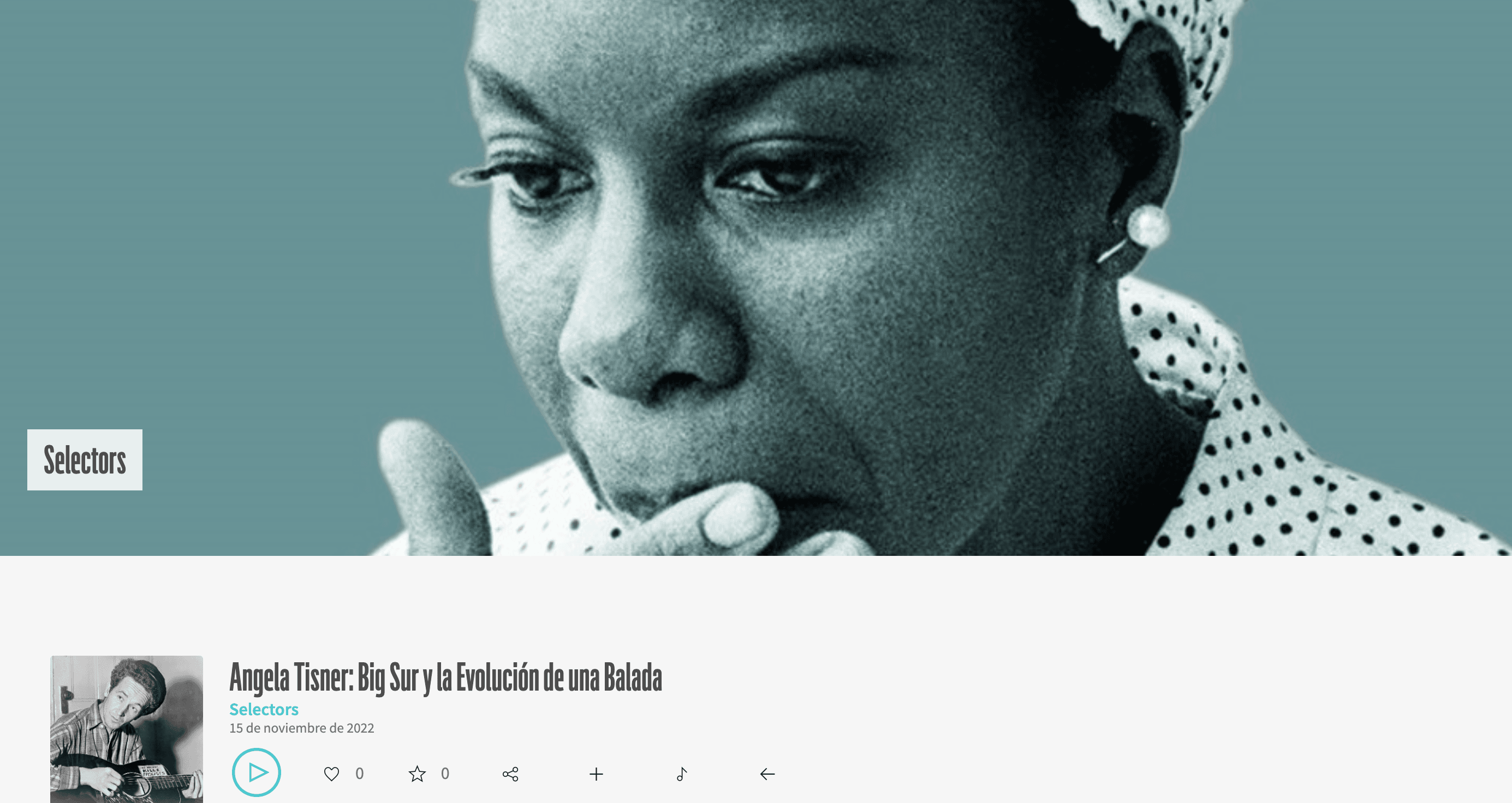
An album reviving folkloric songs about a lost paradise — a long-form study of how a melody migrates, mutates and survives across generations.
Big Sur is a solo album that revives folkloric songs about a lost paradise — gathered, restored and re-arranged in conversation with the singers and players who still carry them. The record sits between balladry and reinterpretation, treating each song as a piece of inherited geography.
It was profiled in depth by Radio Gladys Palmera, the leading Latin-music station out of Barcelona, as part of a longer conversation on how a ballad evolves across decades and across the people who keep it alive.
2023
Radio Relativa — Ethiopia, sacred chant and field recordings
Radio Relativa · Madrid
A radio episode dedicated to Ethiopian Orthodox music, the Old Testament and the field recordings I gathered around them. A laboratory of landscape and listening, broadcast from Madrid.
An invitation from Radio Relativa to share field recordings and reflections gathered from Ethiopian Orthodox liturgy — its monophonic chant, its sense of time, its relationship with the Old Testament — and to weave those materials live with composition.
The episode sits halfway between a listening session and an essay, treating the recordings as primary sources and the conversation as a way to open them up to a wider audience.
"Any paradise worthy of the name can endure all the defects of creation and remain intact."